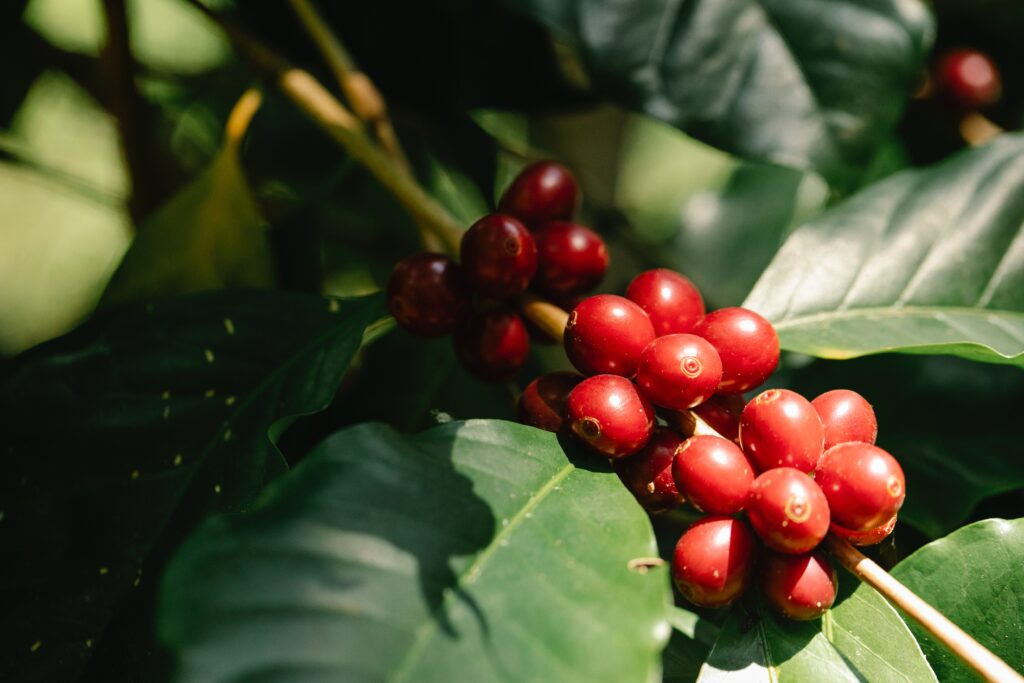
Robusta is coffee produced from the species Coffea canephora, one of the two main commercial coffee species alongside Arabica. It is known for its strong flavor, high caffeine content, and excellent resistance to pests and diseases.
Origin
Robusta is native to Central and West Africa and is now widely cultivated in tropical regions around the world.
Key Characteristics
| Attribute | Description |
|---|---|
| Scientific name | Coffea canephora |
| Common name | Robusta |
| Caffeine | 2.2–2.7% (about twice that of Arabica) |
| Body | Full and heavy |
| Acidity | Low |
| Bitterness | Medium to high |
| Aroma | Earthy, woody, nutty, cocoa-like |
Flavor Profile
Typical tasting notes include:
- Dark chocolate
- Roasted nuts
- Earthy
- Woody
- Tobacco
- Spices
Well-processed Fine Robusta may also display:
- Brown sugar
- Caramel
- Molasses
- Dried fruit
- Cocoa sweetness
Growing Conditions
Robusta grows best in:
- Altitude: 0–800 meters above sea level
- Temperature: 22–30°C
- Rainfall: 2,000–3,000 mm per year
- Climate: Hot and humid tropical environments
Compared with Arabica, Robusta is:
- More heat tolerant
- More disease resistant
- Higher yielding
- Easier and less expensive to cultivate
Bean Appearance
Robusta beans are generally:
- Smaller
- More rounded
- Straighter center groove
- Denser due to higher caffeine and chlorogenic acid content
Common Processing Methods
Robusta can be processed using:
- Natural (dry)
- Washed
- Honey
- Anaerobic fermentation
- Carbonic maceration (for specialty lots)
Processing has a significant impact on sweetness, cleanliness, and complexity.
Common Uses
Robusta is widely used for:
- Espresso blends (for body and crema)
- Instant coffee
- Ready-to-drink coffee products
- Traditional coffee beverages in many producing countries
Advantages
- High caffeine content
- Thick, persistent espresso crema
- Strong body
- Disease resistance
- Lower production cost
- Reliable yields
Limitations
- Can taste harsh or overly bitter if poorly harvested or processed
- Typically less fruity and floral than Arabica
- Higher chlorogenic acid content contributes to bitterness
Robusta vs Arabica
| Feature | Robusta | Arabica |
|---|---|---|
| Species | C. canephora | C. arabica |
| Caffeine | 2.2–2.7% | 1.2–1.5% |
| Sweetness | Lower | Higher |
| Acidity | Low | Medium to high |
| Body | Heavy | Medium |
| Bitterness | Higher | Lower |
| Altitude | 0–800 m | 800–2,200 m |
| Disease resistance | High | Moderate to low |
| Production cost | Lower | Higher |
Specialty (Fine) Robusta
The rise of Fine Robusta has changed perceptions of this species. By using selective harvesting, careful fermentation, and precise drying, producers can create Robusta coffees with remarkable sweetness, balance, and complexity. These coffees are increasingly recognized in specialty coffee competitions and are valued not only for their strength but also for their refined sensory qualities.